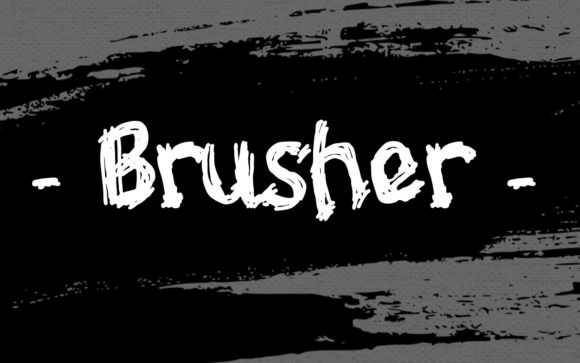
Unleash the Shadows: The Brusher Display Typeface
There is a specific moment in every creative project where the standard, clean sans serif font just won’t cut it. You are designing a poster for a haunted house, crafting a logo for a vintage clothing brand, or laying out a book cover that needs to scream "danger" from the shelf. In these moments, you need a typeface that does more than just convey words; you need one that creates an atmosphere. Enter Brusher, a premium font designed by Upan Sulfan that bridges the gap between raw artistic expression and structured typography. It is not merely a set of letters; it is a tool for storytelling, specifically when the story you are telling is a little bit dark.
The Anatomy of a Dark Typeface
When we talk about typography, we often discuss "personality." A serif font can feel traditional and trustworthy, while a geometric sans serif feels modern and clean. Brusher, however, occupies a different space entirely. As a display font, it prioritizes visual impact over legibility at small sizes, making it a perfect candidate for headlines and hero images. Visually, it is defined by its rough, textured strokes. It mimics the look of ink that has been applied with a heavy brush, dried unevenly, and perhaps even smeared slightly. This gives the typeface an organic, hand-drawn quality that feels gritty and authentic.
The character of Brusher is undeniably creepy and dark. The edges are jagged, and the weight distribution is irregular, which creates a sense of unease. This makes it an ideal choice for Halloween-related projects, horror movie titles, or heavy metal band merchandise. However, its appeal isn't limited to the macabre. The "roughness" of the font gives it a street-art aesthetic. It feels rebellious and counter-culture. For designers working on projects that need to convey an "edgy" or "underground" vibe, this typeface provides an immediate visual shortcut. It tells the viewer that the brand or content inside is not polished corporate fluff; it has texture and soul.
Practical Applications for Creative Professionals
Understanding the visual style of Brusher is one thing; knowing how to deploy it effectively is another. Because it is a display font, using it for body copy is a mistake that would render a paragraph unreadable. Instead, its strengths lie in high-impact areas where few words carry a lot of weight.
For logo design, Brusher can be a game-changer for specific niches. Imagine a craft brewery specializing in dark stouts or a mechanic shop that prides itself on tough, no-nonsense work. A logo utilizing Brusher immediately sets a tone of ruggedness. In packaging design, particularly for products like hot sauces, energy drinks, or artisanal soaps with "dark" scents like charcoal or black cedar, this font style grabs attention on a crowded shelf. It works exceptionally well when printed in a single color, perhaps white ink on a black background, allowing the texture of the brush strokes to become the focal point.
Beyond physical products, the digital landscape offers endless possibilities. In web design, a font like Brusher should be used sparingly—likely for the H1 header on a landing page or for section titles that need to break up the monotony of standard text. For social media graphics, it is incredibly effective. Platforms like Instagram and TikTok are visual-first, and a bold, textured headline can stop a user from scrolling. It works particularly well for promotions related to horror movie marathons, Halloween parties, or "edgy" lifestyle content.
Strategic Impact on Brand Identity and Perception
Choosing a typeface is a strategic business decision, not just an artistic one. The fonts you choose for your brand identity communicate values to your audience before they even read the words. By selecting a creative font like Brusher, you are signaling specific traits: authenticity, rawness, and a rejection of the sterile mainstream.
This influences brand perception significantly. If you are a publisher creating a cover for a thriller novel, using a standard serif font might make it look like a standard mystery. Using Brusher, however, suggests the content is visceral and intense. It creates visual hierarchy by demanding attention. In a layout where you have a headline set in Brusher and a sub-headline in a clean sans serif, the viewer’s eye is naturally drawn to the textured headline first. This hierarchy is crucial for audience engagement; it hooks them with the style and then leads them into the content.
Furthermore, consistency in using such a distinct font helps with recognition. If a small business owner uses Brusher consistently across their flyers, website headers, and merchandise, the audience begins to associate that specific "rough" aesthetic with the brand. It builds a cohesive world around the product. It is a way to maintain professionalism within a niche—professionalism doesn't always mean "corporate clean"; in the world of design, professionalism means having a cohesive and intentional visual language.
Technical Guidance for Implementation
While the artistic application is exciting, the technical execution determines whether a design succeeds or fails. If you decide to integrate Brusher into your workflow, there are several practical considerations to keep in mind.
First, consider font pairing. Because Brusher is high-contrast, textured, and chaotic, it requires a partner that is calm and structured. Pairing it with another script font or a heavily stylized serif will result in visual noise. Instead, look for a geometric sans serif or a clean, modern serif font. The stability of the secondary font will anchor the wildness of Brusher, creating a balanced composition. For example, using a light-weight sans serif for body text provides a necessary "breathing space" for the heavy, dark brush strokes of the headline.
Second, evaluate the readability at various sizes. As a designer, you must test how the font renders on different screens and in print. A brush font can lose its definition if shrunk too small, turning into a blurry mess rather than a textured letter. Always use this font at larger sizes where the brush details are visible and contribute to the aesthetic rather than hindering comprehension.
Third, review the commercial licensing. If you are a business owner or a freelancer creating work for clients, you cannot simply download a font and use it without checking the license. Ensure that the version of Brusher you possess allows for commercial use, especially if you are embedding it in digital products or using it on merchandise for sale. Respecting font licensing is a hallmark of a professional creative.
Finally, look at the included styles. Does the font family come with different weights or alternate characters? Some premium fonts include swashes or ligatures that can add unique flair to a logo. Experiment with these features. Sometimes, swapping a standard "R" for an alternate version can change the entire flow of a word.
Conclusion: The Only Limit is Your Imagination
Typography is the voice of design. While we have thousands of options ranging from polite whispers to loud shouts, Brusher is a scream. It is a premium font asset that offers a distinct, dark, and textured personality. Whether you are a hobbyist making party invitations, a marketer launching a seasonal campaign, or a designer building a gritty brand identity, this typeface provides the raw material to make your work stand out. It reminds us that design doesn't always have to be neat and tidy; sometimes, the most engaging designs are the ones that look like they were created with ink, sweat, and a heavy hand.